
Types of Ski Bikes:
Type 1, Type 2 & Type 3
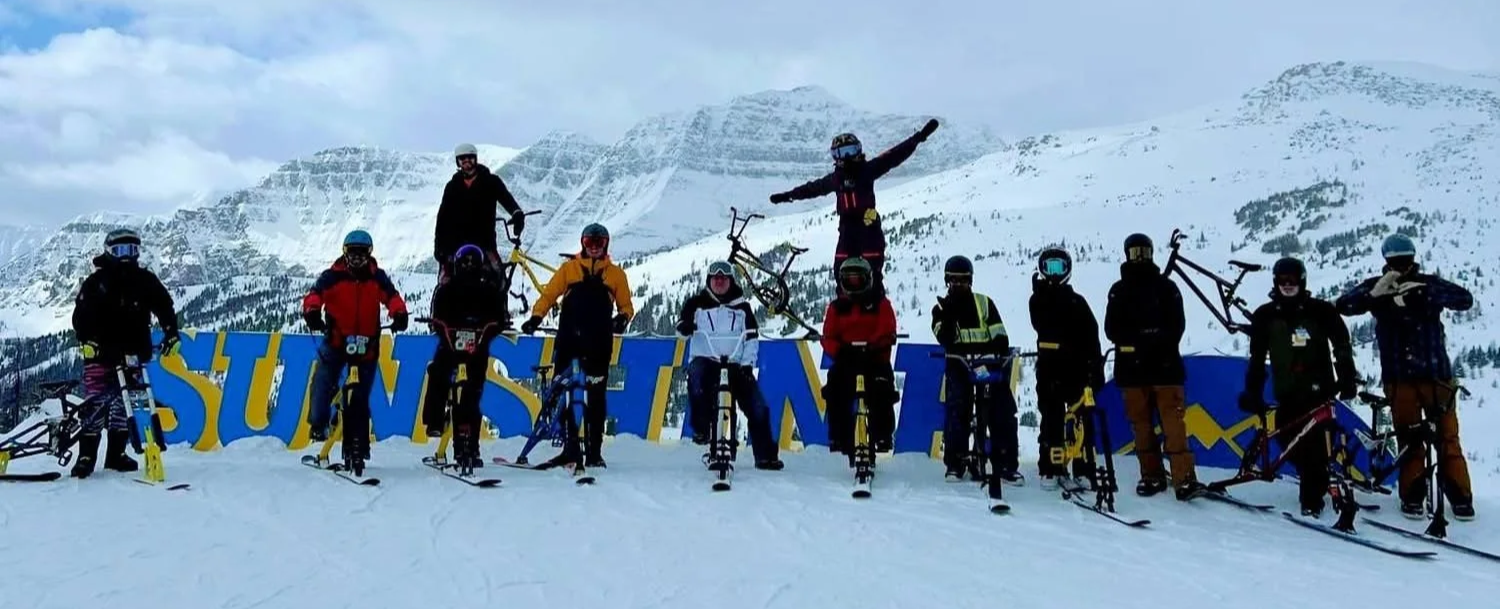
Ski bike, SkiByk, snow scoot, snow bike, skibob, ski trike? There are a lot of names out there for equipment that ride very differently. There are three main types. Here is what separates them, and which one we put people on.
What are the differences?
TYPE 1
TYPE 2
TYPE 3
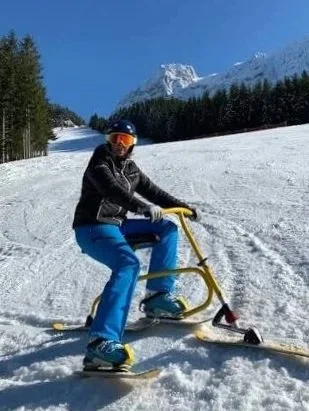
Rooted in the European origins of the sport, Type 1 keeps the traditional skibob design that surged in popularity through the 1960s and 70s. Built around a low centre of gravity and ridden seated, it gives a stable, controlled descent. Riders wear footskis to help with balance and edging, which makes for a smooth, calculated way down the hill. Brenter is the best-known maker. Type 1 bikes rarely offer suspension, which is why they are not part of our fleet. Can’t have all adaptive riders dragging their legs without suspension.
Type 1: The Skibob
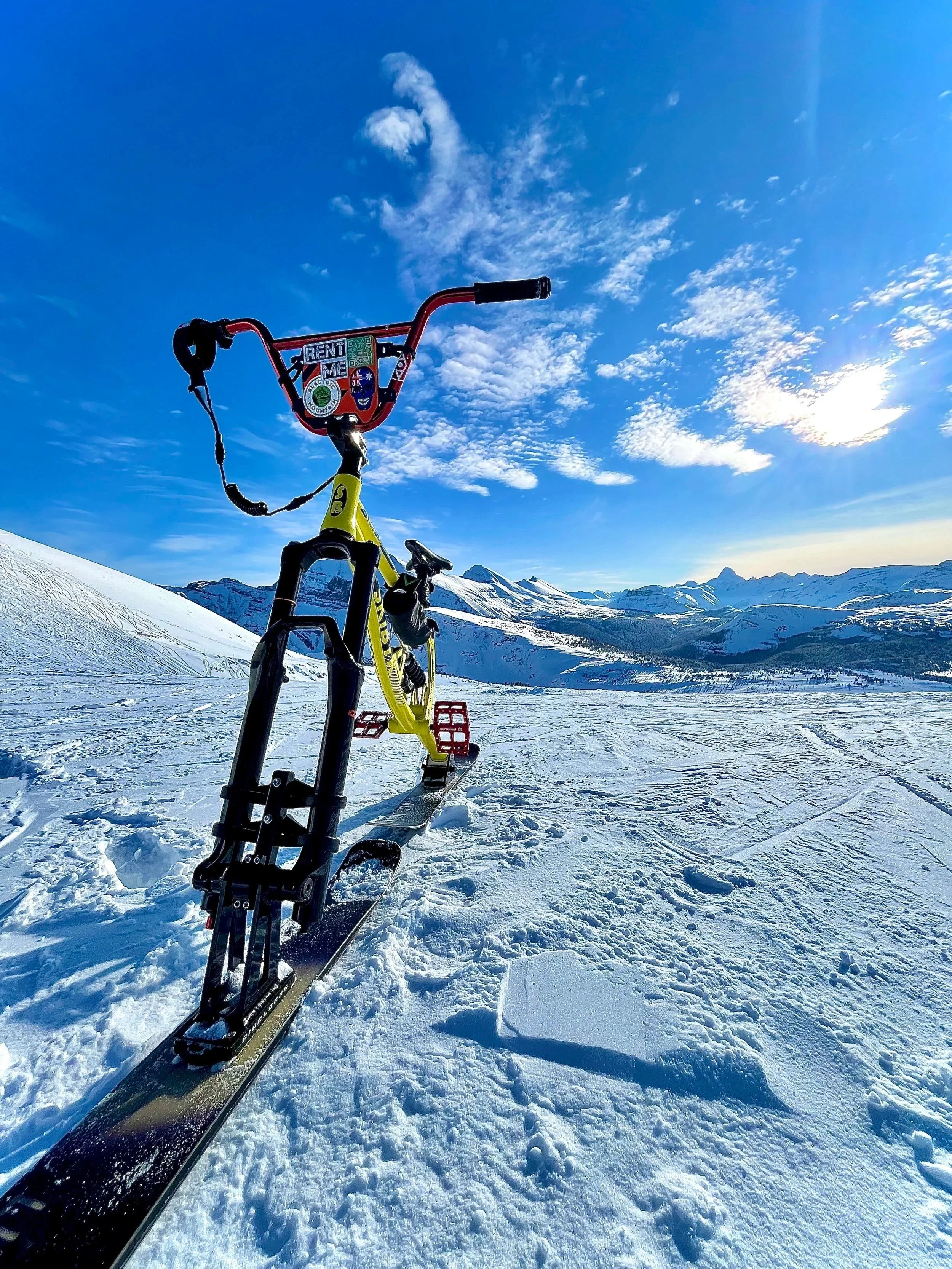
Type 2: Freestyle Ski bike
A modern evolution out of North America, taking heavy inspiration from downhill mountain biking. The frame looks much like a mountain bike, and it can be ridden either seated or standing. Instead of footskis you use footpegs, rests or pedals for control. Many models run adjustable front and rear suspension, built to handle jumps, tricks and aggressive terrain. SkiByk, TNGNT, Lenz and Sledgehammer all offer Type 2 Ski bikes, in both full suspension and some hardtail. This is what Electric Mountain rents and sells, we run full suspension Type 2’s only. Nothing better than an adaptive athlete riding on a cloud! Both SkiByk & Sledgehammer rentals available.
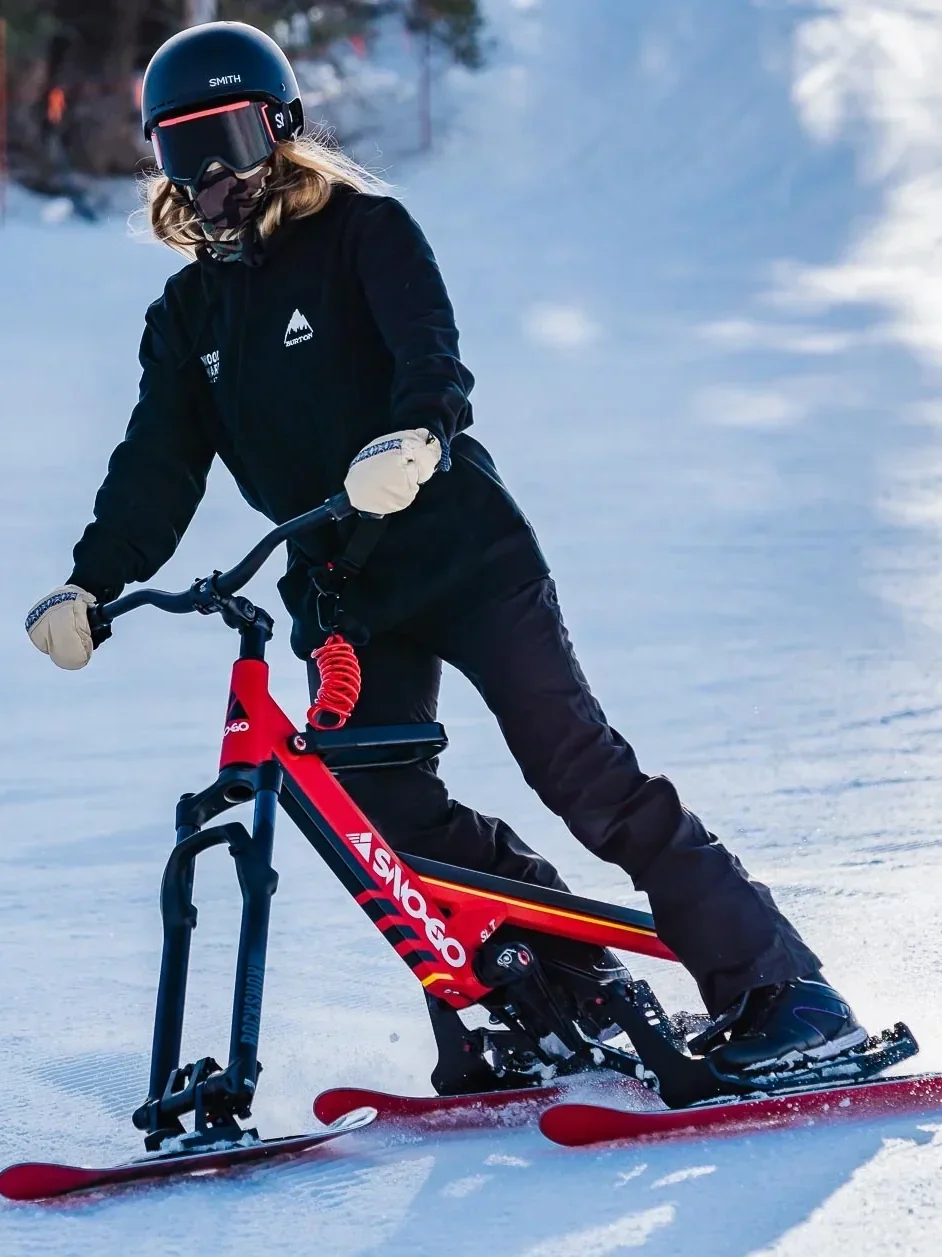
A newer and fast-growing innovation that brings a trike-style design to the slopes. Three skis: one mounted on the handlebars for steering and two positioned underfoot. Ridden exclusively standing up. The layout offers a distinctive blend of control, stability and manoeuvrability, and most models come with front suspension for rough terrain. The Sno-Go is the best known. Type 3 is a capable machine, but with front forks only and no rear suspension it asks considerably more of your hips and legs, so it is not one we put adaptive riders on.
Type 3: Ski Trike
Why we run Type 2’s only?
Adaptive riders are the heart of what we do, and that decision drives the whole fleet. A seated, full-suspension Type 2 takes load off knees, hips, backs and stays stable at slow speed. Type 1 has little or no suspension to absorb the hill. Type 3 is ridden standing and needs far more hip and leg articulation. Both are good machines in the right hands. They are just not what gets someone back on the snow after an injury or surgery. So every bike in the Electric Mountain rental fleet is a full-suspension Type 2 SkiByk or Sledgehammer. (SB100, SB200, EZLoad)
Ski bike, snow bike or skibob?
The names move around depending on where you are. In North America, ski bike is the standard term for all three types. Snowbike in North America usually means something else entirely: a motorized dirt bike converted with a ski at the front and a track at the back, closer to a snowmobile. Nothing on this page has an engine. In Europe, snow bike is sometimes used to mean a ski bike, and skibob for Type 1. You will also see skibyke, ski byk, ski bob, snow trike and ski trike. If you searched any of those and landed here, you are in the right place.
Which type should you ride?
I have ridden all three types, and for most people the answer is a full-suspension Type 2. It is a hybrid of skiing and mountain biking. You sit down or stand up (Skiiers position), steer with the bars and carve with your feet on the pegs, and the suspension takes the hit out of the hill instead of your body. If you already have any edge control from skiing or snowboarding, you will usually have it worked out inside a run or two. If you have never been on snow at all, most people are linking turns by lunchtime. Type 1 asks you to manage foot skis and gives you no suspension. Type 3 is ridden standing only, which puts the work back into your hips and legs. Neither is where I would start someone, and neither is what I run.
This is the part of the business that matters most to me, and it is why the fleet is full suspension only. Riders have come through on Type 2 bikes with prosthetic legs worn while riding, broken and fused ankles, bad knees, double knee replacements, double hip replacements, cerebral palsy and Osgood-Schlatter disease. One rider came to me after a progressive muscle condition meant she had been told to stop skiing and snowboarding. All she wanted was to share a few laps with her husband and son. She got them, on a ski bike. She is not the only one. I have had a handful of riders turn up having been told their days on the mountain were over, and finish the afternoon out there with their family. That is the whole point of this. Sitting down changes what the sport asks of you: your weight goes through the seat instead of your joints, the suspension absorbs what the hill throws at you, and the bike stays stable at slow speed rather than needing speed to work. People get to keep doing something they thought was finished, alongside the people they came with, and not pay for it the next day. Every person is different, and I am not going to tell you what your body can do. A ski bike is not a pair of skis, so if you have been told no to skiing it is worth asking about this specifically rather than assuming the answer either way. What I will do is talk it through before you book. Message me with what you are working with and we will work out whether a ski bike makes sense and which setup suits you.